Plant Hardiness Zones
Understanding your hardiness zone is essential for successful gardening. It helps you choose plants that will thrive in your local climate.
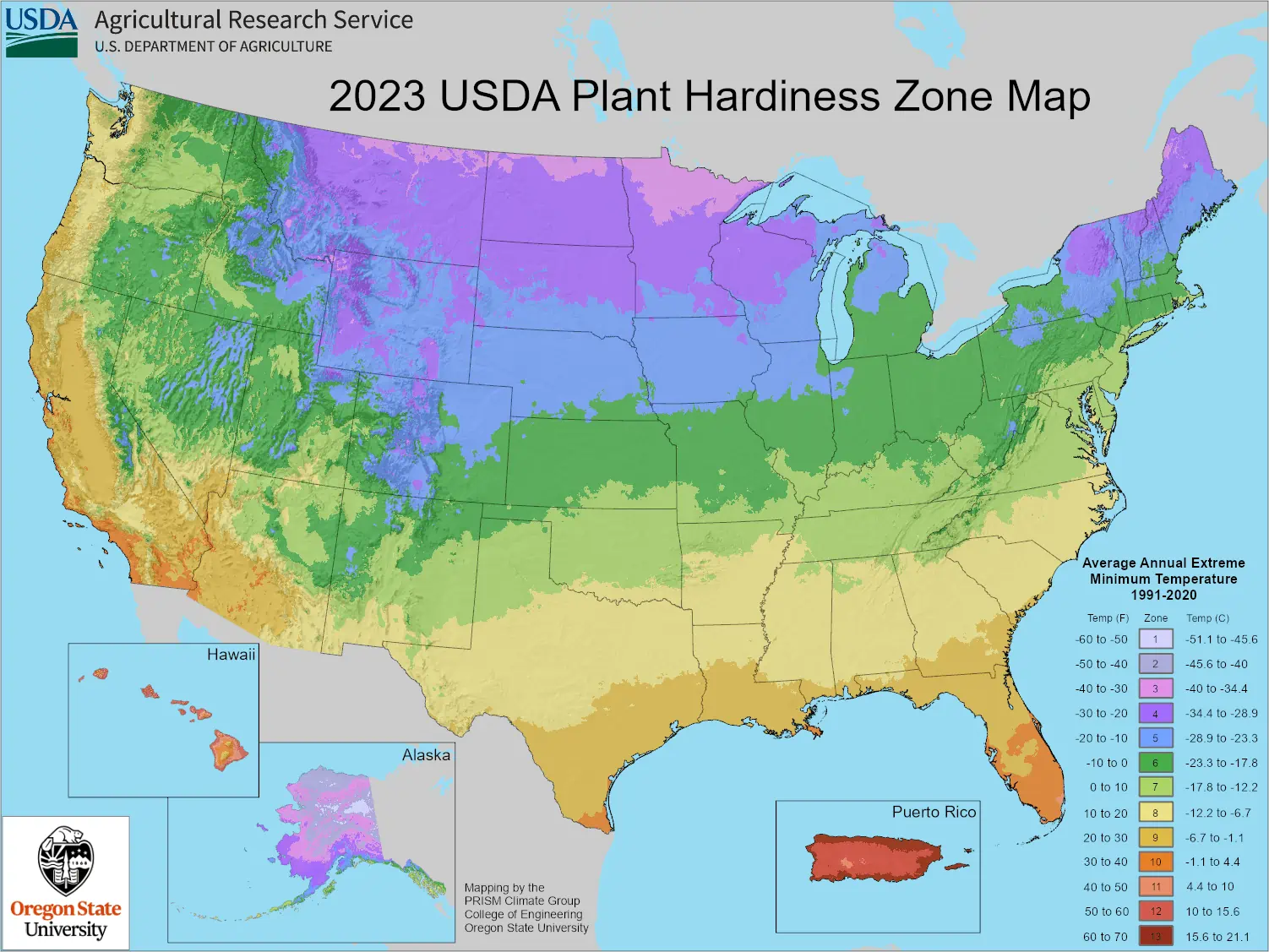
The USDA Plant Hardiness Zone Map divides North America into 13 zones, with Zone 1 being the coldest and Zone 13 the warmest. Each zone represents a 10°F difference in the average annual minimum winter temperature.
The map is based on the average annual minimum winter temperature, divided into 10-degree F zones. For example, if you live in Zone 6, the average annual minimum winter temperature in your area is -10°F to 0°F.
Knowing your hardiness zone helps you choose plants that are likely to survive the winter in your area. However, it's important to remember that hardiness zones are just a guide. Other factors like soil type, rainfall, humidity, and summer heat also affect plant survival.
On the official site, you can search by ZIP code to find your exact hardiness zone.
Zone Descriptions
Examples: Parts of Alaska
Examples: Northern Alaska, high mountains
Examples: North Dakota, Minnesota
Examples: Northern New England, Northern Midwest
Examples: Colorado, Iowa, Nebraska
Examples: Ohio, Pennsylvania, Massachusetts
Examples: Virginia, Oklahoma, New Mexico
Examples: Texas, Georgia, California
Examples: Florida, Arizona, California
Examples: Southern California, Southern Florida
Examples: Hawaii, Puerto Rico
Examples: Hawaii, Puerto Rico
Examples: Hawaii, Puerto Rico
Using Hardiness Zones for Gardening
When selecting plants for your garden, always check their hardiness zone compatibility. Most seed packets, plant tags, and catalog descriptions include the USDA hardiness zones in which the plants will thrive.
Tips for Using Hardiness Zones
- Know your zone: Determine your hardiness zone before purchasing plants or seeds.
- Consider microclimates: Your yard may have areas that are warmer or colder than the overall zone due to factors like buildings, walls, or water features.
- Look beyond zones: While hardiness zones are important, also consider other factors like soil type, rainfall, and sun exposure.
- Push the boundaries: You can sometimes grow plants from one zone warmer or cooler with proper protection and care.
Plants for Your Zone
Explore our plant guides to find vegetables and fruits that are well-suited to your hardiness zone.